
A new website should feel simple, not overwhelming. Many businesses assume they must launch with a long list of pages, such as ‘Team’, ‘Our History’, ‘Mission and Values’, ‘News’, ‘FAQ’, and more. These pages are often seen on large, established sites, but a new business does not need everything on day one. Without visitor data, it’s difficult to predict what pages will be valuable, and extra pages take time and money to build.
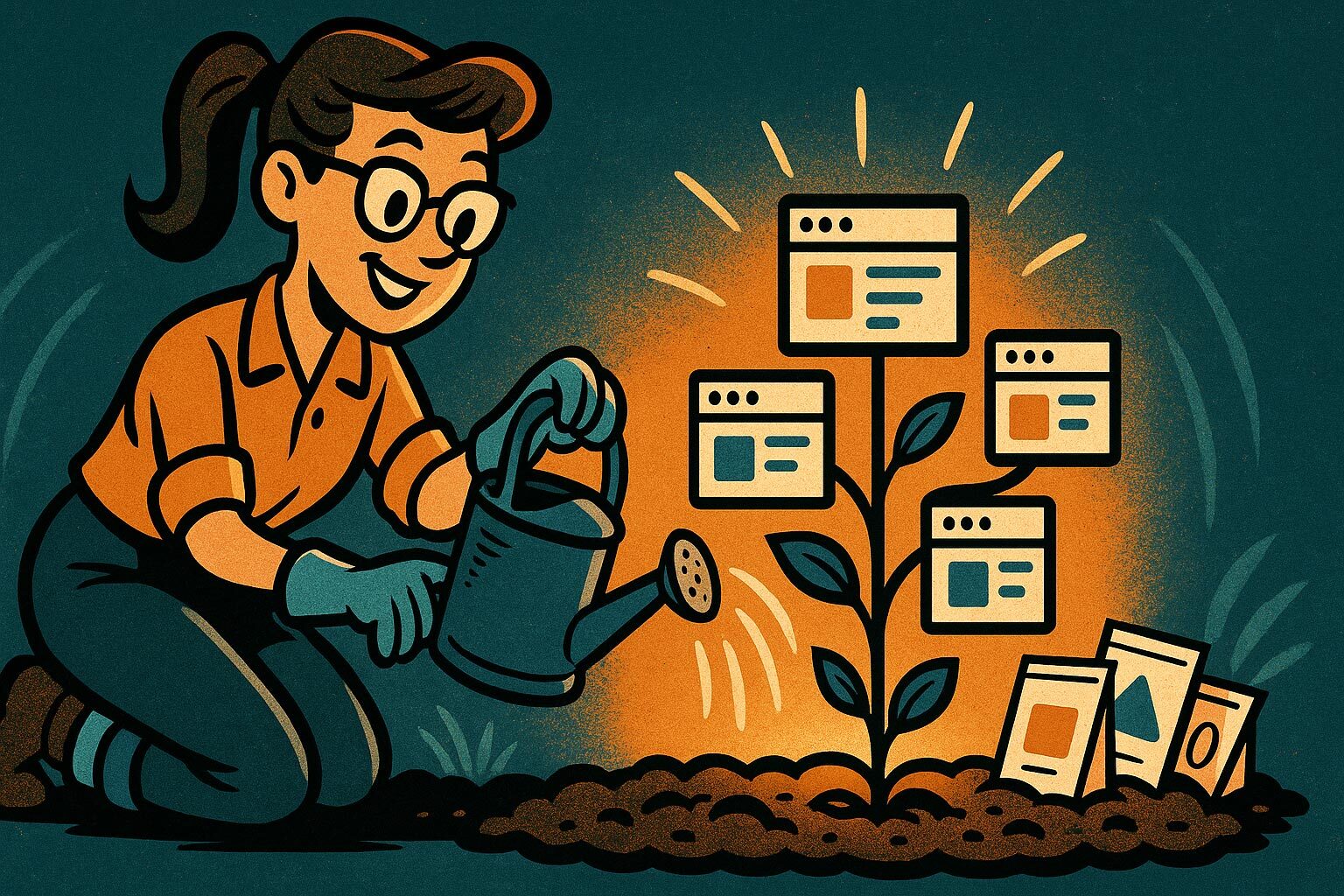
A new website can be imagined as a seed you plant. It only needs what will help it take root: a clear offer, trust signals, and a direct next step. As your business grows, you can add new pages with a purpose, just as a plant grows new leaves as it grows into a tree. Starting with the essential pages gets your site online faster, focuses attention where it matters, and begins collecting data you can use to decide what to do next.
The Myth of More Pages
It’s easy to believe that launching with more pages creates a better website. More content, more links, more places to explore. In reality, most visitors do not tour a website like a gallery. They arrive with a specific need and want a fast answer.
Launching with extra pages often leads to thin or rushed content that few people ever see. Search engines do not reward pages that lack substance. Visitors do not read what they do not feel is important. Every additional page adds writing, design, and maintenance time without guaranteeing any return.
A smaller site focuses attention on what matters most. That focus creates better engagement and a clearer path to action.
What Visitors Actually Want
Most visitors arrive with a clear intent. They want to know if you can solve their problem, if they can trust you, and how to take the next step. They do not want to hunt through menus or read every detail. They want a fast answer.
Some visitors do come to explore. They might be friends, family, other business owners, or people in marketing looking at your design choices. They are not there to buy. They are not your priority. A website should serve customers first.
To support the customers who matter most, a new website should make key answers obvious. Show what you offer, show that you have done it successfully, then make the visitor’s call to action clear. When visitors find what they need quickly, they are far more likely to contact you or make a purchase.
The Pages Your New Website Needs
Most new businesses only need the essential pages to support a strong launch. These pages give visitors the information they need to understand your offer, trust your expertise, and take action.
A simple, effective structure looks like this:
- Home
Quick clarity about what you do and who you help. - About
Basic credibility: who you are, where you are, and why your work matters. - Services (or Products)
What you offer and what a customer can expect. - Portfolio or Testimonials (if relevant)
Real examples or testimonials that show results. - Contact or Booking
A direct path to the next step.
Launch-ready but not live yet:
- Blog (or another content area)
A space for SEO content and helpful articles that attract new visitors over time. Blog sections show search engines that you are an expert, an authority, and a trustworthy business. The structure should be built for launch, even if the page isn’t live yet. Once your first post is ready, publish the section and begin building momentum.
This core set keeps navigation simple and gives every page a job. It also makes the site faster to build, easier to maintain, and ready to expand when the business grows.
Pages That Can Wait
Some pages are common on large websites, but they do not help a new business launch or convert. They take time to build, and they are often the least-viewed pages on a small site.
Examples include:
- Mission and Values
Important internally, but rarely a factor in early buying decisions. If it matters, include a short version on the About page at launch, and move it later if data shows visitors are looking for it. - News or Events
Difficult to keep updated and may empty quickly if your schedule is simple. - Past Work Galleries with dozens of items
Better to show a few strong examples on one Portfolio or Testimonials page. - Careers, Sponsorships, or Partnerships
Helpful later, once demand exists. If relevant, include a brief mention on core pages until a dedicated page is needed. - Financing or Special Programs
Useful when visitors expect it. At launch, a short mention on the Services or Products page is enough. Add a full page later if people start asking for details.
Many of these pages can strengthen your brand later, once people already know who you are. At launch, when a company is still building awareness, they do not help visitors make a decision.
These pages can come later, once you have real visitor data and clear reasons to add them. Starting without them keeps the focus on selling, not filling space.
Build Pages With Purpose
Every page should exist for a reason. Before adding anything new, ask one question: How does this page help someone become a customer? If the answer is unclear, the page can wait.
Before you add a page, check three things:
- Purpose
It supports a clear action or decision. - Content
You have enough real information to make it useful. - Demand
Visitors are asking for it, or data shows they need it.
If any one of these is missing, the page is not necessary for launch day.
When you focus on purpose, your website becomes easier to manage. Each page supports your main goal. Each one carries useful content. As your business grows, you add more pages because the data shows a need, not because it feels standard.
This approach gives you a solid foundation to build on. Your website stays clear, effective, and simple for new visitors to trust and use.
Keep to the Essentials for Day One
A new website does not need to be big. It needs to be clear. Start with the pages that help a visitor understand your offer, trust your business, and take the next step. Add more when data shows a real need.
This keeps your launch simple and focused. It also matches how a business grows in real life: one step at a time. That is why we build websites in a day with a lean page plan. It gets you online sooner, gathering real visitor data, instead of guessing what people will read.
A small site can grow, just like your business, but it should grow with purpose.
Need a new website? We can build one with all of the essentials in one day!
Discover how we plan, design, and launch your new website in one day.